
Driving in the United States is often the best way to experience the country. Here’s everything you need to know to have the best experience ever.
Landing in the United States for the first time feels exciting and the country is designed for the road. Distances are wide, highways stretch for hours, and many of the most iconic experiences are only truly accessible if you are behind the wheel.
But before picking up the keys, there is one thing you absolutely need to understand: US driving rules for tourists are not complicated, but they are different.
If you are traveling to the US for the first time, especially to attend international football matches across different cities, understanding US driving rules for tourists is essential. The good news is that driving in America is generally straightforward. The key is knowing what is different from your home country before you start.
This guide answers the most searched questions clearly and directly, while giving you the real-world context you need to drive in the USA like a local.
Can I drive in the USA ars a tourist?
Yes, tourists can legally drive in the United States using a valid driver’s license from their home country during their stay.
In most states, your foreign license is sufficient if you are visiting temporarily. You do not need to apply for a US driver’s license as a short-term visitor. However, you must always carry your valid license, passport, and rental agreement while driving.
If your license is not written in English, it is strongly recommended to obtain an International Driving Permit before traveling. While not always mandatory, it serves as an official translation and may be requested by rental agencies or law enforcement.
Can I drive in the USA without an international license?
If your driver’s license is in English, you can usually drive in the USA without an International Driving Permit.
If it is in another language or uses a non-Roman alphabet, an International Driving Permit is highly recommended and sometimes required by rental companies. Even when optional, it reduces the risk of misunderstandings during traffic stops.
How do foreigners drive in the USA?
Foreign visitors drive in the USA much like locals do: by renting a vehicle, following state traffic laws, and driving on the right-hand side of the road.
The process is simple. After arriving, you pick up your rental car, present your documentation, review insurance coverage, and begin your trip. Booking in advance through platforms like Rentcars allows you to compare categories, check rental conditions, and understand deposit policies before landing.
For travelers attending matches in different cities, having your own vehicle offers flexibility that public transportation often cannot match, particularly when stadiums are located outside downtown areas.
Does the USA drive left or right?
One of the most important US driving rules for tourists is that vehicles drive on the right side of the road. The steering wheel is on the left side of the vehicle.
If you come from the UK, Ireland, Australia, Japan, or other left-driving countries, the first few hours require extra attention. Intersections and turns are where mistakes are most likely to happen. Taking it slowly during your first day and avoiding heavy traffic immediately after arrival can help you adjust smoothly.
Understanding Speed Limits in the USA
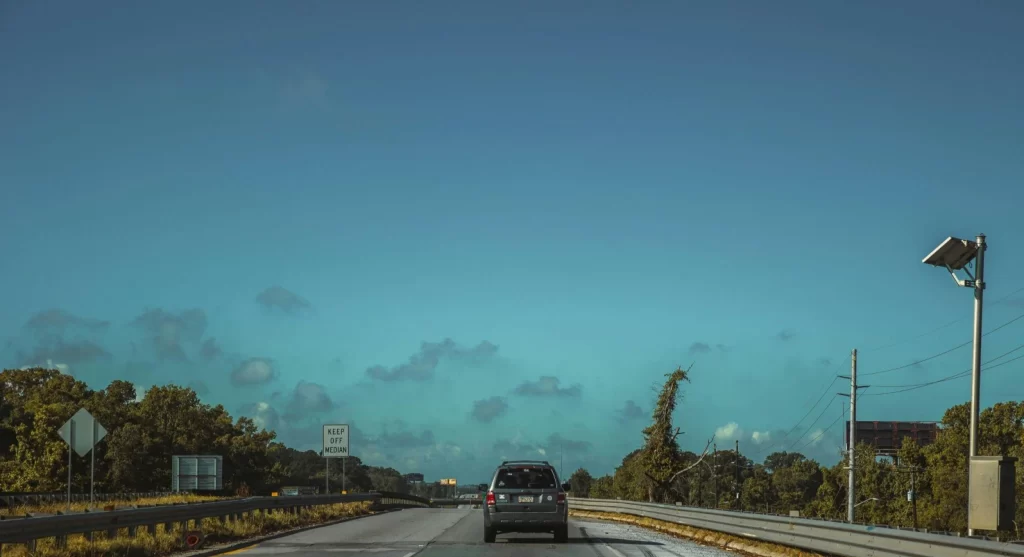
Speed limits in the United States are posted in miles per hour, not kilometers. This detail is crucial.
Residential areas commonly range between 25 and 35 mph. Urban roads typically fall between 35 and 45 mph. On highways, limits often range from 55 to 75 mph depending on the state and region.
Always follow posted signs, as limits may change quickly, especially near school zones or construction areas. Law enforcement is active in many states, and fines can increase significantly in restricted zones.
What you need to know before driving in the USA?
Before driving in the USA, tourists should understand that traffic laws vary by state, distances are often much longer than expected, and enforcement is consistent.
Beyond basic speed regulations, there are several practical rules that frequently surprise international drivers.
In most states, you are allowed to turn right at a red light after coming to a complete stop, unless a sign indicates otherwise. This rule improves traffic flow but requires careful observation of pedestrians and cross traffic.
Seat belts are mandatory for drivers and passengers in nearly all states. Child safety seat laws are strictly enforced and vary by age and weight.
Driving under the influence is treated very seriously across the country. Even small amounts of alcohol can exceed legal limits, and penalties may include heavy fines, arrest, or legal complications that could impact your stay.
Mobile phone use while driving is restricted in many states. Hands-free systems are generally allowed, but holding your phone while driving may result in fines.
What is the 12 second rule in the USA?
The 12 second rule is a defensive driving technique that involves looking at least 12 seconds ahead on the road to anticipate potential hazards.
By scanning further ahead rather than focusing only on the car directly in front of you, you can better prepare for sudden braking, merging traffic, road construction, or debris. This approach is particularly useful on long interstate highways between major cities.
Tolls, Gas Stations, and Parking in the USA
Many highways in the United States operate with toll systems. Increasingly, these are electronic rather than cash-based. Rental vehicles often include a toll transponder, and charges are added automatically to your rental agreement.
Fuel is sold by the gallon, and most gas stations are self-service. Always confirm the correct fuel type for your vehicle before filling up.
Parking regulations vary significantly by city. In large metropolitan areas, carefully read street signs to avoid fines or towing. If you are driving to stadiums for major matches, it is wise to plan parking in advance and arrive early, as traffic volumes increase considerably on event days.
When sharing travel experiences online, avoid using official tournament names, logos, or protected marks in commercial contexts. Generic descriptions such as international football matches or global tournaments are safer when there is any promotional element involved.
Choosing the right vehicle for your US trip
The right vehicle can enhance your experience significantly:
- If your itinerary focuses on city visits and short distances, a compact or economy car offers easier parking and fuel efficiency.
- If you plan to drive between multiple cities or carry luggage for extended travel, an SUV provides comfort and space.
- If you are traveling with friends to attend several matches, a midsize or full-size vehicle offers a balanced combination of room and value.
Booking early through Rentcars allows you to compare options across different US destinations and secure competitive pricing before your trip begins.
Read more:
- First time driving in the USA? A simple checklist for travelers
- Complete Guide: 9 top festivals in the United States
- What to Do in Orlando Besides Disney & How to Get There?
Conclusion
Understanding US driving rules for tourists is about more than legal compliance. It is about feeling comfortable on unfamiliar roads and enjoying the journey without stress.
The United States rewards those who explore it by car. Whether you are heading to vibrant city centers, national parks, or stadiums hosting major international matches, driving gives you the flexibility to move at your own pace.
Prepare in advance, review the rules, choose the right vehicle for your itinerary, and you will find that driving in the USA is not only manageable but genuinely enjoyable. With thoughtful planning and the right rental partner, your road experience becomes part of the adventure itself.