
Traveling between New York City, Philadelphia, and Boston is a classic Northeast U.S. itinerary. And if you’re planning to catch big soccer games along the way, it becomes even more worth it: stadium days tend to reshape your schedule, and having the right transportation plan can be the difference between a smooth trip and a stressful one.
This guide is built to be your central reference, not just a quick overview. You’ll find real-world driving times, distances in miles, route options, toll and parking tips, and smart planning advice whether you’re starting in NYC, continuing on to Boston, or coming from Canada in a rental car.
New York to Philadelphia drive: distance, time, and the easiest route
The New York to Philadelphia drive is about 95–100 miles and usually takes 1 hour 45 minutes to 2 hours 30 minutes, depending on traffic. Most drivers take I-95 South, crossing New Jersey and heading straight toward Philadelphia. It’s the most straightforward route and the easiest to follow even if you’re not used to driving in the Northeast.
What people don’t always realize is that the “best route” often depends on one thing: where you’re starting in NYC. If you’re leaving from Manhattan, bridge and tunnel approaches can add time quickly. If you’re leaving from Queens, Brooklyn, or New Jersey, you can often get onto the highway faster.
Best time to leave NYC by car
If you can choose, try to avoid weekday rush windows. In NYC, even a short delay getting out of the city can cascade into your whole travel day. A mid-morning start or early afternoon departure tends to feel calmer.
Car vs train vs bus: what’s actually best for game-day travel?
If you’re traveling for a major match, flexibility is the name of the game. Trains and buses can be great, but they lock you into schedules and can get pricey or crowded around big events.
Driving
Driving is usually the most balanced option when you’re coordinating game-day timing, traveling with friends, or carrying extra gear. It also makes it easier to stay outside the busiest neighborhoods and choose where you sleep based on price and convenience.
A compact car or midsize sedan is often the sweet spot for NYC to Philly. If you’re continuing to Boston with multiple passengers or luggage, a small SUV can make the longer day more comfortable.
Train
Amtrak runs frequent service through the Northeast Corridor, connecting NYC, Philadelphia, and Boston. Acela and Northeast Regional both serve these cities, with a focus on downtown access. Prices vary a lot based on timing and how early you book, so it’s smart to compare options early if you’re considering rail.
Bus
Buses can be budget-friendly, but the downside is reliability on congested corridors, especially on event weekends.
Tolls you should plan for (NYC, NJ, PA, MA)
Tolls can be a meaningful part of the budget on this corridor, and they’re much easier if you plan ahead.
NYC: congestion pricing can affect rentals in Manhattan
If your trip starts in Manhattan, be aware that vehicles entering the Congestion Relief Zone (streets at or below 60th Street) are charged a toll under NYC’s congestion program.
Practical takeaway: if you don’t need a car inside Manhattan, it can be cheaper and simpler to pick up your rental outside the core, like near an airport or across the river in New Jersey.
E-ZPass is your best friend on the Northeast corridor
On the New York and New Jersey crossings, E-ZPass is the most common tool for smoother toll payments and can help you avoid higher “pay-by-plate” processing costs in many cases.
Pennsylvania: : E-ZPass and Toll By Plate exist, but E-ZPass is cheaper
Pennsylvania Turnpike explains that you can use E-ZPass or Toll By Plate, and toll rates are available via their tools.
Massachusetts: all-electronic tolling (no cash booths)
Massachusetts runs tolling through EZDriveMA, with E-ZPass and Pay By Plate options. This matters if you’re driving into Boston, especially if you use the Mass Pike (I-90) or tunnels.
Rental car tip: Many rentals bill tolls to you after the trip, often with a daily admin fee. It’s worth asking at pickup how tolls are handled so you’re not surprised later.
Parking in Philadelphia on game days
Philadelphia is very driveable, but game-day traffic patterns can get intense near sports venues. The most practical strategy is:
Arrive early, park once, and plan to walk a bit. If you’re staying overnight, some travelers prefer leaving the car at the hotel and using a rideshare or subway for the stadium area depending on the neighborhood and timing.
Concierge-style tip: If your game ends late, give yourself buffer time. Leaving at the same moment as thousands of fans can add real delay, even when parking is well organized.
How many days should you spend in Philadelphia?
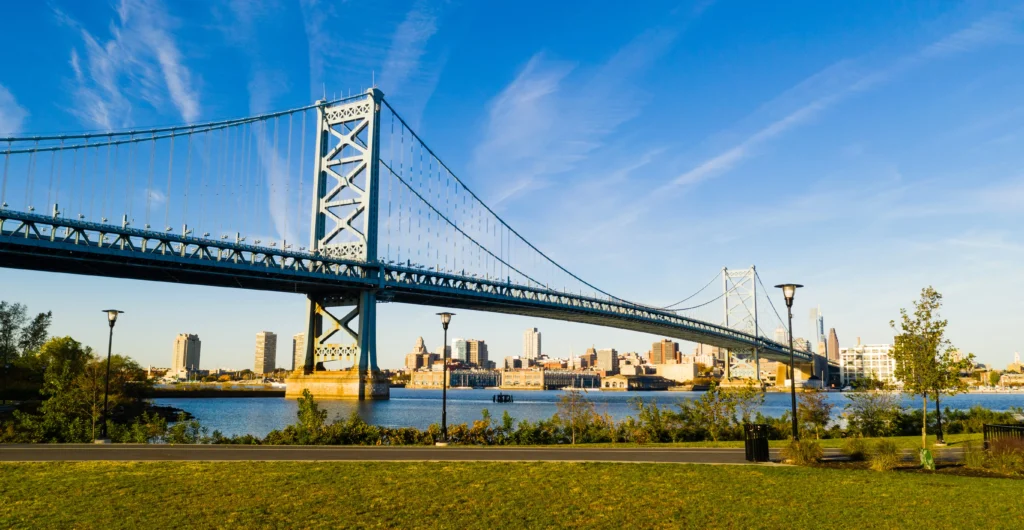
Plan 2 days in Philadelphia if you’re combining a game with sightseeing. One day for the match and the surrounding area, and a second day for the city’s historic core and neighborhoods.
Philadelphia is compact enough that you can see a lot without feeling rushed, and it fits perfectly between NYC and Boston.
Philadelphia to Boston drive: distance, time, route options
Philadelphia to Boston is about 306–308 miles and typically takes around 5 hours without heavy traffic. The usual approach combines I-95 North and, as you get closer to Boston, connections toward I-90 depending on where you’re staying.
The NYC metro area can be the slowest portion of the entire Boston run. If your priority is a smoother drive, it’s worth timing your departure to avoid peak congestion around the city.
Most travelers benefit from at least one planned stop. Connecticut is a common “break point” for food, rest, and recharging before the final push into Boston traffic.
How much does the train cost from New York to Boston?

NYC to Boston train pricing varies widely by schedule and how early you book. Amtrak’s Northeast services (including Acela) run downtown-to-downtown and are popular on this corridor. For accurate pricing, it’s best to check your specific date and time since event weekends can change availability fast.
Coming from Canada in a rental car: what to know before crossing
Cross-border rentals are possible, but they’re not automatic. Two things matter most:
- Your rental agreement must allow cross-border travel.
- You need the right travel documents for a land crossing.
Border documents (high-level, practical)
CBP’s Western Hemisphere Travel Initiative (WHTI) sets document requirements for entering the U.S. by land or sea. CBP also states that U.S. citizens entering by land/sea need a WHTI-compliant document, such as a passport book, passport card, Enhanced Driver’s License, or trusted traveler cards like NEXUS.
And the U.S. State Department notes the passport card is specifically designed for U.S. citizens traveling by land/sea from Canada (not for international air travel).
Driver’s license and IDP rules vary by state (don’t skip this)
If you live in the U.S., your valid state driver’s license is generally what matters. If you’re visiting with a foreign license, state rules differ:
- Pennsylvania: foreign license holders may drive for up to one year; IDP is strongly recommended but not required.
- New Jersey: visitors may drive with a foreign license if it’s accompanied by an IDP issued in their home country.
- Massachusetts: foreign licensed drivers may operate if they meet requirements; the RMV notes it does not recognize documents that claim to “confer driving privileges” beyond your valid license.
Concierge takeaway: If your license is not in English, having an IDP or official translation can prevent headaches. Also, rental companies may have their own documentation requirements even when the state allows driving.
A game-friendly sample itinerary (low-stress and realistic)
A simple plan that works well for most travelers:
Start in NYC in the morning, arrive in Philadelphia around lunchtime, and use the afternoon to settle in. Game day becomes far less stressful when you’re already in the city and not fighting I-95 traffic last-minute.
The next day, leave Philly earlier, take one planned break on the way to Boston, and arrive with enough time to check in, park, and reset before the next match.
This structure reduces fatigue, avoids late-night driving after long events, and keeps the trip enjoyable even when schedules change.
FAQ
How far is New York to Philadelphia by car? About 95–100 miles, usually 1h 45m to 2h 30m depending on traffic.
How far is Philadelphia to Boston by car? About 306–308 miles, roughly around 5 hours without heavy congestion.
Do I need an E-ZPass for this route? You don’t “need” it, but it makes tolls smoother across NY/NJ/PA/MA systems, and MA uses all-electronic tolling.
Can congestion pricing affect my NYC rental? Yes. Vehicles entering Manhattan’s Congestion Relief Zone (at or below 60th Street) are charged under the program.
Can I drive from Canada into the U.S. with a rental car? Often yes, but only if the rental agreement allows cross-border travel. You’ll also need proper entry documents for a land crossing under WHTI rules.
Conclusion
The New York to Philadelphia drive is one of the easiest big-city road trips in the U.S., and it becomes even more valuable when you’re planning around major soccer games. Add Boston to the itinerary and you have a classic Northeast route that rewards smart timing, toll awareness, and the right vehicle choice.
If you want the freedom to shape your schedule, pick where you stay, and keep your trip flexible around game days, renting a car can be the best match.
And when you’re comparing vehicle categories, providers, pickup locations, and drop-off options, Rentcars can help you line up the best fit without overcomplicating the booking process.